Pages

Monday, October 14, 2013

Editing, Reading, Writing, All That Jazz


I’ve been reading/skimming a lot of novels lately. Frankly I’ve always been an obsessive reader (as in, who needs sleep, food, showers, or fresh air when you have books?).* But lately I’ve been doing a lot more analyzing—something I rarely did in the past. (Which lack is not an impressive quality in an author-to-be. Which is not even remotely the point of this blog post.)

The point is that I’ve started noticing some things about a large number of these books—many of which have been self-published. Let me first say that I think self-publishing is wonderful in so many ways. This is by no means a disparagement of self-publishing. However, I have noticed that many of these particular books that I’ve been reading bear a few unfortunate commonalities.

The biggest of these is problems with story elements that simply don’t make sense, that never get explained clearly—things that are obviously a big deal to the characters but that I just don’t understand. For example, I recently read a novel in which the main character is cursed (in rhyming couplet and all). But the curse is so confusing that I never actually understood the peril, even after the character theoretically figured it out. In another novel, I couldn’t understand what the main character thought he was saving the world from.

Here’s what I think happened: It all made sense in the author’s head. It was perfectly clear. But somewhere between the brain and the keyboard, some of it just got lost, or muddled, or twisted around until it no longer made sense for a reader.

Now, I am a copyeditor. If you haven’t heard me mention that yet, here you go: I copyedit. I pick up the tiny details that no sane people care about (like smart quotes vs. straight quotes—oh how it burns me). This is useful stuff for an author. It means my manuscripts (once I have actually worked on them sufficiently) are quite clean overall. Of course I miss things; I’m human. But grammatically and punctuationally,** my work tends to be in good shape.***

So, onto my point.

Being a copyeditor isn’t good enough to make a good manuscript. It requires someone else to look at your book—someone else who hasn’t been swimming through it for the past many moons, someone who knows only what is there on the page. This is something every writer needs. This is why agents and editors exist (well, among other stuff). This is what self-published authors must get as well.
 
Last week I heard about this giveaway at Portable Magic Editing. What a great way to get started. Sign up, ye authors! Sign up! (Or maybe don’t, because that decreases my chances of winning.)

We authors need someone to tell us when we’re writing nonsense. Someone other than our angry readers.


* I both love and fear that I gave this obsession to my older daughter. Oh the pride that shines in my eyes when I see her walking in from the car, to the dinner table, and off to her bedroom carrying a book and reading as she walks. I remember those days so well (probably because they were just yesterday). Sadly, she has not yet developed the talent of looking where she’s going at the same time.

** Do you love how I’ve just told you I’m great with words and now I proceed to make them up?

*** Now I’m going to be severely embarrassed when it turns out I made some particularly dumb mistake in this post. Oh well.

Thursday, October 3, 2013

Book Review: Erin Morgenstern's The Night Circus

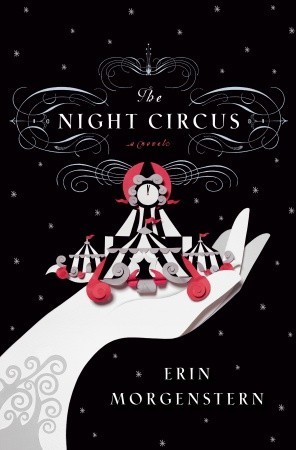
The Night CircusI was only maybe two or three chapters into this book when I realized that there was something magical about the book itself, not just the story within it. It took me a while to figure out what made the book so dreamlike and lovely. So far it certainly wasn’t the storyline—in the first several chapters we are treated primarily to an abusive/bordering-on-murderous father, a suicide, an incredibly out-of-place vulgarity,* and another father figure who adopts an orphan only to prepare him to fight to the death. So, not a lot of loveliness there.

But there are two hints that pull you through the ugliness of the opening story. The first is the opener, a truly brilliant page that uses the second person POV (“you do this, you do that”). It is an invitation to enter the Cirque des RĂªves (the Circus of Dreams) and come see for yourself, and it works like a magnet, pulling you in.

The other hint was something I had a hard time quantifying at first. There was something in the quality of the writing that made it beautiful, but it’s not as if there were many particularly beautiful sentences or paragraphs that I could point to. Eventually I decided that it felt like the cadence of the writing, the rhythm of the words, a little like a gentle lullaby or the soft rocking of a boat on calm water. It was like that quiet space of time before you fall asleep and dream, where your mind is suggestible and everything seems possible.

To me, that dreamy cadence is what made this whole novel work so well—beyond the fantastical world of the circus and the romance of the story, either of which would have made the book a success on its own. But it was that strange and lovely rhythm that made the book magic.

I would totally go to this circus.**

A side note: My book club met to discuss it, and we dressed in black and white with a splash of red, just like the fans of the circus. We ate black and white and red themed foods (which was really hard, by the way—there aren’t a lot of nondessert items that are really black or white). I lit cinnamon- and vanilla-scented candles and darkened lights, and I wished I could have hired a contortionist (okay, not really). It’s a good book club book, and it lends itself very much toward sensory experiences.

A content note: I’ve already revealed pretty much all the negative content. There is a little more violence, as well, but it is not graphic and does not glorify the violence. The only other content concern is a short, nongraphic sex scene. You can see it coming a mile away and easily skip the page.

* I recognize that in the writing world, I’m a bit of a prude. But even setting that aside, this particular swear word was so out of place in the story. It felt like a definite misstep for pure (and pointless) shock value. It was so jarring, so wrong for the diction, the setting, and even the character that I had to look it up to see when the word first came into use. It did, indeed, originate before the setting of this story, so at least it wasn’t anachronistic, but it still didn’t fit. There are so few critiques that I have to offer for this story, but I really think this one was a mistake.
** Plus, it doesn’t have clowns.


Friday, September 6, 2013

Book Review: Juliet Marillier’s Wildwood Dancing


Note: Click here for my latest fortnightly MMW post, on the power of words.
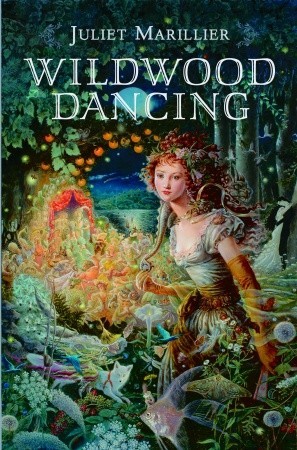
Wildwood Dancing (Wildwood, #1)
As a side note: It appears that the cover
illustrator actually read the book! The
picture goes perfectly with the story.


Also note: Plenty of spoilers here, although they’re not particularly unpredictable spoilers.

You don’t hang around the fairy tale novel scene very long without hearing someone rave about the awesomeness that is Juliet Marillier. And yet, somehow, I had never actually gotten around to reading one of her novels. Until now!

I started with Wildwood Dancing partially because it is young adult (most of her novels are adult), partially because it is shorter than Daughter of the Forest (the one I most often here about from fairy tale enthusiasts), and partially because it is the only one my library has (*sigh*). After reading it, I understand the enthusiasm.

First off, she brought the fairy tale story into Transylvania. And who doesn’t want to read a fairy tale set in Transylvania? It was the perfect place for this story, really, because of the automatic mythos built into the place. The creepy, dark world of mythic Transylvania (I’m sure it’s a lovely place in real life) and the dreamlike wildwood (the land of the fae) worked beautifully together. The creatures who populate the wildwood are also part of the atmosphere that create a lovely sort of surreal world but with a dark undertone. And while I normally complain about a book that requires a pronunciation guide, this one didn’t bother me—after all, she wasn’t purposely making up names that are hard to pronounce; she was using a language that already exists, so it wasn’t her fault it required some explanation.

So, setting: wonderful and immersive. (Even for me, and I don’t usually care much about setting.)

Next, the plot. While I think setting is where Marillier excels, I also loved the way she weaved “The Twelve Dancing Princesses” with bits of “The Frog Prince” and plenty of her own plot elements. While the first few pages were hard for me to get into (probably my aversion to accounting and having to consult a pronunciation guide), I was afterward quickly immersed in the sense of foreboding. I think that may have been one of the things that worked so well and pushed the story forward—just the sense that something worse was always right around the corner (and it usually was). Also, I appreciated the details that brought the original fairy tales (which tend to be very archetypal, nonspecific) to vivid life.

Now, the characters. Here I will confess that for me, Marillier loses some pretty major points by accidentally hitting two of my major pet peeves in one novel—and also having a little bit of creeper/stalker thrown in.

Jena: When you are a reasonably intelligent individual facing someone who has already proven to be callous and manipulative, stomping your foot and crying, “It’s not fair” just isn’t going to do you much good. Argh. And I’m sorry to say she did this several times (maybe without the foot stomping, though). I just wanted to slap her upside the head and say, “Duh, of course it’s not fair. This is the bad guy you’re dealing with here, hon. Deal with it.”

Tati: If you are in love with someone, and you can’t be with that person—or better yet, maybe you can be with that person, if you can just be patient long enough—it is probably not the best idea to lie around and starve yourself to death. Honestly, what is it about true love that makes it impossible to take care of yourself? The answer: nothing. True love makes you want to live (okay, yes, occasionally true love makes it hard to eat a meal here and there—but not to the point of starvation). It’s helpless infatuation that makes you want to die. So Tati I want to slap upside the head (characters in books sometimes need a good thwack, sorry to say) and say, “Either get over him, or start eating so that he has something to come home to other than a corpse. Because he’s probably not going to enjoy that for very long (even if he has been hanging out with the Night People for years).” I will also note that I don’t think Tati gets a pass on this issue by having any magical reasons why she had to stop living.

Gogu: Does anyone else find it slightly creepy that a man-turned-frog has been watching Jen dress and undress for years? This one I am trying to overlook because of suspension of disbelief and the fairy tale nature of the story; weird things like this just happen in fairy tales, and it’s not some sexual perversion—it just is. And it was never taken in that direction at all in the book, nor do you get a sense of any sexuality in his looking. That being said, I still have to try to avoid thinking about it, or my sense of how that would be in the real world overtakes the fictional world, and I say, “Yikes!” (Strangely, though, I don’t slap Gogu upside the head. Probably because it would be hard to do that to a frog.)

All my complaints about the characters aside, however, I did enjoy the book. And even if I didn’t love it the way I would have if I’d liked the characters more, I will certainly read more of her novels simply for the way she tells a story.

Friday, August 23, 2013

My Other Blogging Locale

It occurs to me that I meant to mention this, well, yesterday! Starting yesterday, I will be writing fortnightly* at Mormon Mommy Writers. Join me there for some Mormon Mommy Writing fun!

Here was my first post. Enjoy!

*My use of this word is all part of my personal crusade to bring "fortnight" back into common usage. Join me! Start saying "fortnight" whenever you can manage. No longer do you get a biweekly paycheck--now it's fortnightly! No longer do you wash the sheets every other week--it's every fortnight! And me--I don't just get cramping once a month; I get it every fortnight! Joy!** I'm sure you can think of some other wonderful places to say "fortnight." Come on, you know you want to.***
**At least mittelschmerz has some good uses, right?
***Did anyone else notice that my footnotes were significantly longer than the post itself?

Daughter's Review: Two Princesses of Bamarre, by Gail Carson Levine


The front of her "book report"
we did for homeschool.

I recently read this book with my two daughters (ages 5 and 2) over the course of a few weeks. I had read it before myself, and I loved the story, but I was curious to see how they would take it. Daughter #2 was, as predicted, not particularly interested—but it turned out good for getting her to fall asleep during several nights of bedtime reading. Daughter #1, however, was inspired by this novel. Shortly after finishing it, she rediscovered a pair of boots we had (that are too small for her at this point) and started calling them her seven-league boots. She would put them on, then prepare to step carefully—because once she stepped, she would zip away quickly in that direction. Shopping trips were very interesting for a few days there.

Next she determined that she needed to carry around her adventure supplies. First she was carrying them all in a little purse she had, but I finally took pity on her (because not everything would fit in her purse) and gave her one of my old purses to use. The contents of the purse are as follows: a spare pair of shoes (for wearing when she’s not traveling seven leagues per step), a change of clothes (you need spare clothing for adventures, of course), some moily herb (a healing herb from the book, representing by a couple silk flowers we had), a few odds and ends, and my personal favorite—Bloodbiter (the sword from the book, represented by a small stuffed Ewok). Now she was ready for adventure.
Answers to questions dictated by my daughter.

She carried the purse around with her just about everywhere for a week or two, calling it her “adventure sack.” She still has it hanging in her room, and it comes out once in a while. This is my daughter who is ready for everything. I love the way this book became included in her rich imaginary world. (Believe me, she is full of imagination. She is currently determined to invent both magic and a flying car that doesn’t require a driver or seat belts. These are merely her latest ideas.)

What I love most about the book, though, is the idea of this timid little Princess Addie discovering that other things—big things—were more important than her fears. What a fantastic message for my daughter (who probably doesn’t need it much, as she is not inclined toward ridiculous worries) and for me (who totally needs that message on an almost daily basis).

Wielding Bloodbiter.
Being strong and awesome, like Addie.
The book is fun, wholly grounded in items and creatures and ideas of myth and fairy tale—while playing with them in its own ways—and in my opinion, inspiring. It is a book that I would call “wise” (I hope to get to that idea in another blog post sometime soon, but we’ll see).

P.S. As per usual, Blogger’s formatting has defeated me, and I give up. 

Monday, August 12, 2013

In Which I Write Because I Should


Here we are, at the end of the day, and I have no writing to show for it. This, by the way, is exactly one day after I told my photographer friend that her 365-day project was inspiring me to maybe begin my own 365-day project again. Only I’m talking 365 days of writing because taking photos every day would not only point up my absolutely lack of photography knowledge and talent—but it would also make it quickly apparent that my house is rarely clean.

Supposedly because I’m a writer, and I spend my time writing.

So the point here is that I thought to myself, “I can do 365 days of writing at least a teensy bit every day, right? On Sundays, I’ll just work on my personal blog or write witty, brilliant, and insightful emails to friends and family. On the rest of the days, I’ll work on my books, my blog, my other blog . . . or that other blog.”*

I thought to myself, “If nothing else I can do 200 words per day.” Most days, far more of course** (I insert virtuously), but at least 200.

So here I am, and we’ve hit 268. Win!

Good night.


*It seems I have a lot of blogging to do these days.
**Because at 200 words per day, I would finish a novel once every . . . never.***
***Especially since those 200 would be spread over all sorts of projects and also because they’d all be first draft words (which, as we know, are statistically 95% junk).