Pages

Wednesday, September 9, 2015

Some Restrictions Apply

The following is a rough draft of a silly bedtime story I wrote for my kids as part of a project I'm working on right now. Enjoy!


            You have probably heard of genies, have you not? Powerful, mystical creatures who have the ability to grant wonderful wishes! They usually live in bottles and lamps, and when you rub the lamp, a genie appears to grant you three amazing wishes. Yes, that is the story of most genies.
            But not all genies are quite like that. This is the story of a different type of genie.
            Samarzin was a young man who lived in a little village. He was walking along the road between his village and the next one day. He was going there as a trader to trade cloth and pots and various trinkets, and suddenly as he looked down, he saw a lamp.
            Interesting, he thought. Maybe I can trade it for something.
            So he picked up the lamp and rubbed it on his shirt to clean it off so he could examine it better.
            No sooner had he rubbed it on his shirt than a mysterious smoke came billowing out of the lamp. The smoke formed itself into a figure, and the figure was a man.
            “Who dares to rub my lamp?” the man’s voice boomed, loud and deep.
            Samarzin squeaked, “Me, Samarzin.” He shivered in fear and asked, “And who are you?”
            “I am the great genie Erequat,” he boomed again. “Since you are the possessor of my lamp, you are now entitled to three wishes.” Then, in a tiny voice that Samarzin could barely hear, he muttered, “Some restrictions apply.”
            “What was that?” Samarzin asked.
            “Oh, nothing,” Erequat said. “Now what is your wish?”
            Samarzin thought for a few moments. “I would like to be wonderfully healthy all my life.”
            Erequat scratched his head. “Hmmm . . . That’s a problem.” His voice got a little whispery again. “You can’t wish for anything that directly affects your person. Sorry, no blue hair, no immortality, and no perfect health. So,” he added, again booming, “wish for something else!”
            Samarzin thought again. “How about a beautiful woman to marry and love all my life!”
            Erequat shook his head sadly. “Oh, no no, we can’t have that. The rules strictly forbid influencing someone else’s ability to make their own decisions. Can’t make someone fall in love with you.”
            Samarzin considered and realized that was only fair. He probably wouldn’t want a woman who had only fallen for him by magic anyway. So he thought some more. “I know! A big pile of money!”
            Erequat looked distinctly uncomfortable this time. “Well, you see, I’d like to. It does sound like an excellent wish, but I can’t create something out of nothing. Laws of science and all that.”
            Samarzin wrinkled his brow. What was he going to wish for? “Well, can’t you just take some money from somewhere else? Or how about some jewels or gold or something?”
            This time Erequat looked appalled. “Steal something? You want me to steal?”
            Samarzin hastily retracted his statement. “No, never mind, of course not.”
            He continued to suggest various wishes—nice weather for his vacation, a good deal in his trading today, maybe just a little good luck?—and for each wish, Erequat shook his head.
            Finally, fed up, Samarzin threw his hands up into the air. “Never mind, I do not want any wish at all!”
            Erequat’s booming voice was back. “Who dares to rub my lamp but not receive his wishes?”
            Samarzin sighed and rolled his eyes. It wasn’t good to anger genies, though, no matter how ridiculous their rules, so he thought he’d try again. He cast his eyes around him. He was standing on a dirt path, and on the ground near his feet were three round stones. He pointed. “How about those stones? Can I have those stones?”
            Erequat thought for a moment, muttering to himself something about rules and restrictions and requirements. After a moment, he boomed out, “Yes!” Then he bent to pick them up and hand them to Samarzin. “And for your next wish?”
            Samarzin shook his head vigorously. “Oh no, I’m sure there must be a rule about how many items I can receive per wish. I’m sure each stone takes up one wish, so I’m all done.” He was backing away now, hoping to get back on the road to the next village.
            Erequat nodded thoughtfully. “Yes, you’re probably right. Yes . . . ” He drew himself up big and proud again. “Be thankful for this day, the day you met the great and powerful wish-granter, Erequat.”
            Samarzin plastered a smile on his face. “Yes, of course. Thank you ever so much.” Erequat’s smoke sucked back into his lamp, waiting for the next lucky traveler to make a wish.
            Samarzin tossed the rocks back on the road and hurried on his way.

Monday, August 10, 2015

Book Review: Silver in the Blood, by Jessica Day George


Rating: 4/5 stars

Clean rating: PG(ish), I guess maybe a bit more for violence—but it’s not gore and it’s totally appropriate to the story.

Silver in the Blood (Silver in the Blood, #1)Short summary: Cousins Dacia (wild, flirtatious, big personality) and Lou (much quieter) are socialites in 1897 New York. They are on their way, separately, to Romania for the first time, to meet their extended family, the formidable Florescus. But, you know, Romania—watch out for vampires and gypsies and such. The Florescus just happen to be longstanding friends with the mysterious descendants of Vlad the Impaler (AKA Dracula), and it appears that Dacia and Lou are part of some nefarious plans, whether they like it or not.

Recommend it?: (Mild spoiler alert, concerning the topic of vampires.) Do you enjoy magic, paranormal beings, the idea of an old Romanian setting? Did you like George’s princess novels (Princess of the Midnight Ball, etc.)? Do you think Dracula-related lore is interesting, especially when it’s not the same-old neck biting? (Spoiler here: You don’t have to like vampires at all; there is no vampire action. Which is actually a great relief to some of us—like the ones who wanted to slap silly every single character in Bram Stoker’s Dracula.) Then you should read it.

My 7yo daughter has recently been reading (and loving) some other Jessica Day George (Tuesdays at the Castle, which we’re listening to together, and Dragon Flight), as well as Gail Carson Levine (Stolen Magic) and Shannon Hale (Princess Academy novels), so I had to give some thought to whether I would let her read this one as well. Content-wise, I don’t have any problem with it. There is some scary stuff, and there is some blood and violence, but that’s not what stops me from recommending it to her. I don’t think I will just yet largely because thematically it’s a bit above her head. There’s romantic tension that she just doesn’t care about (yes, some of the others she’s read recently also contain romance, but not quite so integrally). There’s also family tensions and difficulties that I don’t think really get. So it’s not a matter of not letting her, it’s just that I don’t think it will draw her in yet. I’ll suggest it a few years down the road.

What I liked:

Format. The story alternates between Dacia and Lou’s perspectives, as well as including letters, journal entries, and a couple of telegrams and notes. I think this format works wonderfully for this type of story. Reading a letter from Dacia to Lou, knowing Lou wouldn’t get it until it was too late, heightened the tension and the frustration for the characters.

The Dracula tie-in. I am always a big fan of taking elements of a story that has reached pop culture saturation (like, say, Dracula) and devising alternate explanations, or adding to the story and backstory, or just messing with it. I enjoyed the way George messed with it.

What didn’t work for me:

Dacia’s reaction. I can’t be too specific about this without being a major spoiler. So I’ll try to talk around it a bit. Something vastly important happens to Dacia, and it really messes with her head. But the way she reacts didn’t ring very true to me. It seemed too big of a response, for reasons that I didn’t find wholly convincing. What was so frustrating here was that I felt like it could have been so easily corrected, just by emphasizing a few elements of the event a little more. It’s a minor quibble, though, and I just pretended that it had been written the way I wanted (hooray for the imagination!), so it worked out fine.

In short: It was not a perfect, luminous novel (see my Daughter of the Forest review), but it was highly readable, highly enjoyable if you like the genre. It left me happy I read it and still hearing the haunting words in my head, “I am the Claw. I am the Wing. I am the Smoke.”

Monday, December 8, 2014

The Shepherd and the Wise Man

I love nativity sets. I love the little baby Jesus lying in a manger (or better yet, being held by Mary). I love to see Joseph watching over his family with care—a wife he loved and a boy he would raise as his son. I love the star and the angels. I love it all, but sometimes what I love most is the shepherds and the wise men and the lessons they teach about coming to Christ.

I imagine that the shepherds were average, decent people with regular lives. I think that, like many of us, they worked and played, just going about the business of daily living. I doubt they were looking for anything amazing.

And then, imagine it, one night an angel came to them. An angel! Of course they were frightened, but the angel comforted them:

“Fear not: for, behold, I bring you good tidings of great joy, which shall be to all people.

 “For unto you is born this day in the city of David a Saviour, which is Christ the Lord.” (Matt. 2:10–11)

Then more angels gathered together and praised God. And how did the shepherds respond—these men who were unprepared for such an incredible revelation? They dropped everything and ran:

“As the angels were gone away from them into heaven [they didn’t even wait until the angels had left!], the shepherds said one to another, Let us now go even unto Bethlehem, and see this thing which is come to pass. …

“And they came with haste.” (Luke 2:15–16)

They were so excited to receive the gift that God had sent—to meet His Son—that they went without hesitation. And once they had seen Him, they “made known abroad the saying which was told them concerning this child.” (v. 17)

This night had changed their lives, and they wanted everyone to experience what they had felt.

The wise men, on the other hand, had already been looking for Christ and for signs of His coming. They were waiting for Him. When they came to find Him, they told Herod, “We have seen his star in the east, and are come to worship him.” (Matt. 2:2)

They had to travel to reach Christ. I don’t know how far, but I think they had to make quite a journey to find the babe, and I think they began their preparation for that journey long before they saw the star. They prepared for its rising, and when they saw it, they were ready. They traveled however far they needed so that they could reach the Christ child. This was not the journey of one night. This was a journey that required effort and planning and deliberation and steadfastness.

They too rejoiced when they finally found Christ: “And when they were come into the house, they saw the young child with Mary his mother, and fell down, and worshipped him: and … they presented unto him gifts; gold, and frankincense, and myrrh.” (v. 11) These gifts symbolized the roles Christ would play, but I imagine they were also very precious to the wise men.

They came to Christ and set before Him the best of what they had. But maybe the best thing they could give Him had already been given: their lives, spent in watching for their Savior.

How often are we given brilliant moments of spiritual illumination, moments that beg us to act upon personal revelation that would bring us to Christ? And how often do we wait, intending to do it in just five minutes? Or tomorrow, or next week? The shepherds knew, I think—they knew that the details of living can so easily get in the way. So they did not wait; they left their tasks of the moment—tasks that were undoubtedly important—and they ran to seize the most important opportunity of their lives. They ran to meet their Christ.

And then, on the other hand, are we not also given opportunities that require time and planning, work that cannot be finished and checked off in one day? And how often do we begin these tasks with great enthusiasm but find our desire and our will tapering off? Or do we sometimes forget, after days or months, to keep a vital watch over our lives? Do we, for example, forget to seek Him and watch for Him? And when we forget, do we miss the signs that Christ has come to our lives? Do we miss Him? The wise men waited and watched; I imagine some of them spent their whole lives living in preparation to meet the Christ. They continued on, even if it sometimes seemed boring or irrelevant, even if it was hard to find hope that they would someday receive their sign. They kept looking.

So at this time of year I am reminded of the ways each had of coming unto Christ. And I hope that I, too, can come unto Christ with the enthusiasm of the shepherd and the determination of the wise man.

Sunday, November 16, 2014

The Kids Meet Shannon Hale

About a month ago, Shannon Hale came to Annapolis for a book signing. In case you missed it, I have a major author crush on her.

True story (briefly mentioned in my blog post about Kiersten White): A couple years back, when she came to the Baltimore Book Festival, I of course dragged my bestie to go see her. Then, at the festival, I almost walked straight into her because I was talking on the phone and apparently I can’t talk and walk at the same time. So, after I nearly knocked into her with my very graceful personage, I jerked to a stop and said something brilliant like, “You’re Shannon Hale!”

“Yes. I am,” she replied.

I am so very clever.

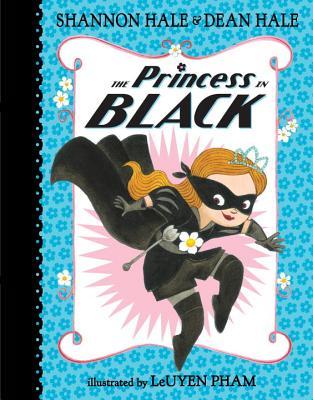
Anyway, moving on, she came to the Annapolis Barnes and Noble on her The Princess in Black book tour, and I was dying to get that book. Especially since it was just before my own little princess in black’s fourth birthday (okay, technically, my child would prefer to be a queen, but we can’t have everything). Also, my six-year-old absolutely loves the Ever After High books, so I thought she would enjoy getting to meet the author.

Hale was gracious and funny and friendly. She dressed up to do a reading from her book, and when I mentioned my daughter’s upcoming birthday, Hale gave her a free t-shirt that says, “This princess wears black.” Then we bought books of course: The Princess in Black and a boxed set of the Ever After High books. When I tried to take away The Princess in Black so that I could buy it, the three/four-year-old wouldn’t let it go; I practically had to pry off her fingers. And after we got them signed, the six-year-old simply sat and hugged her Ever After High books—all the way home.

And me? I once again made a brilliant impression by telling Hale all about the time I was pregnant with my kid while she was pregnant with her twins and I dreamed one night that we had her over for dinner. It was only in retrospect that I realized I probably sounded like a total stalker.*

So good times were had by all.

Brief book reviews:
The Princess in Black
The next day, when we officially gave the three/four-year-old her birthday book, The Princess in Black, we read it together and were all delighted. The illustrations are charming, and you just kind of want to hug everyone (especially the big blue monster). The story is fun, and I love the princess with a secret identity. I hope there will be lots more of these books.

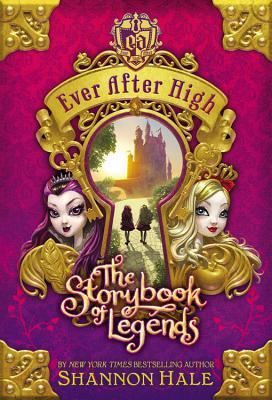
The Storybook of Legends (Ever After High, #1)The Ever After High books, I must admit, are not my favorite. The storyline and idea are fun, the book design is super froofy-girly-cute, but for me there are too many efforts to mishmash the regular and the fairy tale worlds—things like MirrorPhones, hybrid carriages, muse-ic class, home evil-nomics, and the slang “hexcellent.” It’s just a teensy bit overboard for me. However, like I said, the six-year-old loves them,** so I think they’re great for a younger set. I just don’t think they’re nearly as good adult crossover books as most of Hale’s other works.

And now, a side note: If you haven’t heard, I have a pathological fear of driving. It has gotten better, but a drive to Annapolis would have been unthinkable even a year ago. So I was pretty darn proud of myself for getting up the courage to drive to Annapolis and back—especially in the dark and the rain. Also, hooray for GPS! And also also, this should show just how much I love Shannon Hale.***

* The fact is that I dream about all sorts of weird stuff all the time, so dreaming about you doesn’t mean I’m a stalker. It just means my brain is weird.
** Reading my review over my shoulder, she said, “But those are my favorite parts!”
*** But, as we have already established, in a totally non-stalkery way.