Pages

Friday, February 28, 2014

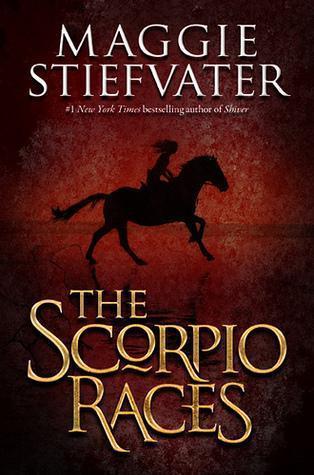
Book Review: The Scorpio Races by Maggie Stiefvater

Rating: 3/5 stars (for purely personal reasons; if I had been someone else, I would have rated it 4/5; see “What didn’t work for me” below)
The Scorpio Races 
Clean rating: PG-13 largely because, hello, it’s dealing with violent, flesh-eating horses. There is death and blood and maybe a limb or two lost, though not described in overly gory detail.

Short summary: Told from two POV characters, Puck (a female) and Sean, The Scorpio Races is the story of a tiny island where, every year, bloodthirsty water horses wash up on the beach and the men of the town ride them in a highly lucrative race (lucrative if you survive and win, of course). Both Puck and Sean have something they are desperate to fight for, they both enter the race, and they find themselves wanting to help each other. People die. Sheep are eaten (by said bloodthirsty water horses). Teapots are painted. Good times are not had by all.

What I liked: Stiefvater (I do wonder how to pronounce that name) built an interesting mythology of these water horses (whose names I also cannot pronounce and can’t even remember how to spell)* who come to the island every year. They feel just like part of the world of Thisby (the island), and I kept imagining what the world (ours) would be like if there really were such a place. It felt very real.

I also enjoyed the plot overall, except that I could not really engage with the characters as much as I would have liked to for the reasons described below. When I pretended that I didn’t find a couple of their specific behaviors completely incomprehensible, I enjoyed the characters and felt for their struggles and wished them success in their goals and needs.

The conclusion was quite satisfying for me, not one of those “everyone gets exactly what they want too easily” conclusions, but one where some sacrifices were made, some middle ground was found, and the people we cared about got what mattered most to them—though not the way they originally planned. A friend complained that the deal made at the end was unbelievable, and I see her point, but it didn’t bother me over much.

What didn’t work for me: I am not an animal person. If you know me, you know this already. I don’t do pets, largely because they require so much time and work and cleanup and such. But also . . .

(And here’s where I take a minor detour to bring us back to the point.) About two days after I read The Scorpio Races, I read Dan Wells’ I Am Not a Serial Killer. The main character, John Cleaver, is a sociopath (has antisocial personality disorder). This means he has no empathy, no understanding of human emotions; he can read about them and see them and even try to imitate them, but he doesn’t really get them. At one point, John describes it as an entirely different language that he simply doesn’t know. Reading this directly after my inexplicable experience with Scorpio made me say, “Yes! That’s exactly how I feel about pets!” I can read about how much people love their pets and how they don’t mind the dog tearing up the sofa, the cat peeing on the bed, etc., but I just don’t get it. I do not have that kind of attachment to any animal, nor am I willing to have it. I think wild animals are beautiful, and I have a healthy respect for them, but I’m quite happy for them to stay out of my house. (Let us just be clear here, though: Don’t worry, I am not a sociopath.)

So, back to Scorpio. If I don’t get liking your dog who eats your slippers, I’m certainly not going to get why Sean cares so much about his water horse that he doesn’t mind the fact that it is a powerful, killing monster. To me, this is not a horse you want to hang around. Period. Sean’s love for his horse is utterly incomprehensible. It is a foreign language. So I could not relate to him on a very fundamental level.

The same goes for Puck, except in her case it’s the island. Again, I can’t get attached to a land the same way she does. If the place I’m living is wholly inhospitable (and spits out monster horses every October), if I cannot find a way to support myself or my family there, and if I have better prospects elsewhere—well, I feel like ninety-nine times of a hundred, I would move to that elsewhere.

In summary: This inability to relate is why I couldn’t give it another star. I just couldn’t get these people, and so the story didn’t work for me on the visceral level where found myself saying, “I do not understand these choices.” On the other hand, I realize that this is a personal reaction that probably wouldn’t be a problem for a large majority of people, so a 4/5 stars would be my rating if I were someone else.

* Her choice of the name is actually based on some water horse legends, so I can’t completely fault her for it, but I confess to preferring fictional names I can pronounce.


Wednesday, December 11, 2013

Expecting the Unexpected


Day 31 (or maybe 28?): Sore and crampy. Blech.

I stretch and climb out of bed. I’m giving it three more days. Three more days and I’m taking a test, just to get it over with so I can accept that my body has just come up with a new way to torment me. I mean seriously, I don’t think I’ve ever in my life prayed that my period would actually come sooner, but it’s getting a little old sitting around and waiting. And I can’t even count it right, what with that weird, stuttering period last month. Did it start on Tuesday or Friday? What is going on when I can’t even figure out when my period started?

Maybe this month I’ll get a 33-day cycle or something fun like that, just to mix things up a bit. I’ve been trying to be not cranky, to just be grateful that my body works, at least fairly well. To be glad that the endometriosis (maybe) and tiny fibroid (or is it a polyp? or just a mysterious shadow on the ultrasound?) are not cancerous, are not even remotely serious. All they do is cause me some annoyance, some pain (how bad on the scale of one to ten? they ask; well, I’ve done natural childbirth, so . . . not that bad).

Oh, and apparently they make it kind of hard to get pregnant.

My daughter strolls into the room as I’m getting dressed for the day. I hug her tight and give her a good tickle. Life is good. I’m just tired of the doubt.

Day 32 (29?): Sore and crampy. Blech.

I’m beginning to doubt that keeping a log of my menstrual cycle every morning is going to do anything for me other than make me crazy. Do I really need to analyze every sneeze-induced muscle cramp? (Note to my round ligaments: You’re only supposed to feel this way if I’m like six months pregnant.) It’s not like taking notes is going to magically change anything (except, apparently, my sanity).

I looked in the mirror last night, and my cheeks were rosy. Another pregnancy symptom. Just like everything ever—every weird twinge, craving, gastrointestinal event, sore spot, and whatever else is someone’s pregnancy symptom. And they’re pretty much all PMS symptoms too. Still, the rosy cheeks—never had that before. But I’m freezing cold. I mean, really really cold. That’s definitely PMS talking. Really, I’m just tired of the months of wondering, overanalyzing, thinking maybe everything could be a sign. Thinking maybe this time. And always being wrong and feeling dumb. And let’s not forget cranky.

Stupid period, please just come and put me out of my uncertain misery. I know I’m not pregnant. Just come confirm it.

Day 33 (30?): Sore and crampy. Blech.

Okay, that’s it. The moment I wake this morning, I decide that it’s ridiculous to stay on this little merry-go-round of wondering for the three bucks it costs to buy a test. I’m just gonna buck up, do it, and then when it’s negative, I can wait patiently a little longer. I can schedule that “elective surgery” to maybe clear out whatever gunk is causing problems, and most of all I can go back to knowing I’m not pregnant, this time with no doubts.

So I head for the bathroom.

I dip the little stick, try not to think about what’s in the cup I’m holding. Oh for not having to think about pee. Some days it feels like it’s all pee. Reminding my older daughter that she needs to go pee. NOW. Dealing with my younger daughter’s pee, with her still deciding whether she wants panties or diapers. And now mine.

Count to five. Done.

The instructions are always so lovely and specific. Dip. Set down on level surface. I wonder briefly how slanted the surface would have to be to skew results. Now I watch. “DO NOT READ RESULTS AFTER THREE MINUTES,” the box always yells at you. So my husband’s trusty watch sits beside the stick, also watched. Har har har. Watched.

Oh good, there’s the little line creeping across the results window. There it is, crossing the test line (that shows that you haven’t completely screwed up the test). Crawl crawl crawl, up the stick.

I blink.

I squint and blink again. Something like a gurgle of amusement, hysteria, and disbelief exits my lips.

Oh.

Day 34 (weird that it counts as the same day, even though it’s completely different): Sore and crampy. Hooray?

Monday, October 14, 2013

Editing, Reading, Writing, All That Jazz


I’ve been reading/skimming a lot of novels lately. Frankly I’ve always been an obsessive reader (as in, who needs sleep, food, showers, or fresh air when you have books?).* But lately I’ve been doing a lot more analyzing—something I rarely did in the past. (Which lack is not an impressive quality in an author-to-be. Which is not even remotely the point of this blog post.)

The point is that I’ve started noticing some things about a large number of these books—many of which have been self-published. Let me first say that I think self-publishing is wonderful in so many ways. This is by no means a disparagement of self-publishing. However, I have noticed that many of these particular books that I’ve been reading bear a few unfortunate commonalities.

The biggest of these is problems with story elements that simply don’t make sense, that never get explained clearly—things that are obviously a big deal to the characters but that I just don’t understand. For example, I recently read a novel in which the main character is cursed (in rhyming couplet and all). But the curse is so confusing that I never actually understood the peril, even after the character theoretically figured it out. In another novel, I couldn’t understand what the main character thought he was saving the world from.

Here’s what I think happened: It all made sense in the author’s head. It was perfectly clear. But somewhere between the brain and the keyboard, some of it just got lost, or muddled, or twisted around until it no longer made sense for a reader.

Now, I am a copyeditor. If you haven’t heard me mention that yet, here you go: I copyedit. I pick up the tiny details that no sane people care about (like smart quotes vs. straight quotes—oh how it burns me). This is useful stuff for an author. It means my manuscripts (once I have actually worked on them sufficiently) are quite clean overall. Of course I miss things; I’m human. But grammatically and punctuationally,** my work tends to be in good shape.***

So, onto my point.

Being a copyeditor isn’t good enough to make a good manuscript. It requires someone else to look at your book—someone else who hasn’t been swimming through it for the past many moons, someone who knows only what is there on the page. This is something every writer needs. This is why agents and editors exist (well, among other stuff). This is what self-published authors must get as well.
 
Last week I heard about this giveaway at Portable Magic Editing. What a great way to get started. Sign up, ye authors! Sign up! (Or maybe don’t, because that decreases my chances of winning.)

We authors need someone to tell us when we’re writing nonsense. Someone other than our angry readers.


* I both love and fear that I gave this obsession to my older daughter. Oh the pride that shines in my eyes when I see her walking in from the car, to the dinner table, and off to her bedroom carrying a book and reading as she walks. I remember those days so well (probably because they were just yesterday). Sadly, she has not yet developed the talent of looking where she’s going at the same time.

** Do you love how I’ve just told you I’m great with words and now I proceed to make them up?

*** Now I’m going to be severely embarrassed when it turns out I made some particularly dumb mistake in this post. Oh well.

Thursday, October 3, 2013

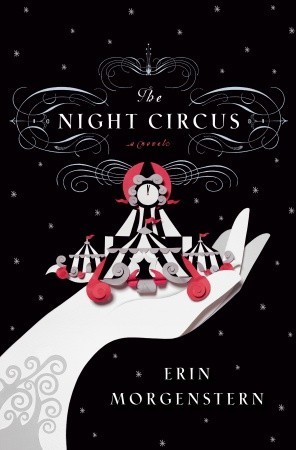
Book Review: Erin Morgenstern's The Night Circus

The Night CircusI was only maybe two or three chapters into this book when I realized that there was something magical about the book itself, not just the story within it. It took me a while to figure out what made the book so dreamlike and lovely. So far it certainly wasn’t the storyline—in the first several chapters we are treated primarily to an abusive/bordering-on-murderous father, a suicide, an incredibly out-of-place vulgarity,* and another father figure who adopts an orphan only to prepare him to fight to the death. So, not a lot of loveliness there.

But there are two hints that pull you through the ugliness of the opening story. The first is the opener, a truly brilliant page that uses the second person POV (“you do this, you do that”). It is an invitation to enter the Cirque des Rêves (the Circus of Dreams) and come see for yourself, and it works like a magnet, pulling you in.

The other hint was something I had a hard time quantifying at first. There was something in the quality of the writing that made it beautiful, but it’s not as if there were many particularly beautiful sentences or paragraphs that I could point to. Eventually I decided that it felt like the cadence of the writing, the rhythm of the words, a little like a gentle lullaby or the soft rocking of a boat on calm water. It was like that quiet space of time before you fall asleep and dream, where your mind is suggestible and everything seems possible.

To me, that dreamy cadence is what made this whole novel work so well—beyond the fantastical world of the circus and the romance of the story, either of which would have made the book a success on its own. But it was that strange and lovely rhythm that made the book magic.

I would totally go to this circus.**

A side note: My book club met to discuss it, and we dressed in black and white with a splash of red, just like the fans of the circus. We ate black and white and red themed foods (which was really hard, by the way—there aren’t a lot of nondessert items that are really black or white). I lit cinnamon- and vanilla-scented candles and darkened lights, and I wished I could have hired a contortionist (okay, not really). It’s a good book club book, and it lends itself very much toward sensory experiences.

A content note: I’ve already revealed pretty much all the negative content. There is a little more violence, as well, but it is not graphic and does not glorify the violence. The only other content concern is a short, nongraphic sex scene. You can see it coming a mile away and easily skip the page.

* I recognize that in the writing world, I’m a bit of a prude. But even setting that aside, this particular swear word was so out of place in the story. It felt like a definite misstep for pure (and pointless) shock value. It was so jarring, so wrong for the diction, the setting, and even the character that I had to look it up to see when the word first came into use. It did, indeed, originate before the setting of this story, so at least it wasn’t anachronistic, but it still didn’t fit. There are so few critiques that I have to offer for this story, but I really think this one was a mistake.
** Plus, it doesn’t have clowns.


Friday, September 6, 2013

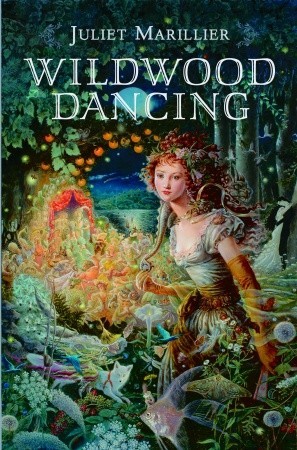
Book Review: Juliet Marillier’s Wildwood Dancing


Note: Click here for my latest fortnightly MMW post, on the power of words.
Wildwood Dancing (Wildwood, #1)
As a side note: It appears that the cover
illustrator actually read the book! The
picture goes perfectly with the story.


Also note: Plenty of spoilers here, although they’re not particularly unpredictable spoilers.

You don’t hang around the fairy tale novel scene very long without hearing someone rave about the awesomeness that is Juliet Marillier. And yet, somehow, I had never actually gotten around to reading one of her novels. Until now!

I started with Wildwood Dancing partially because it is young adult (most of her novels are adult), partially because it is shorter than Daughter of the Forest (the one I most often here about from fairy tale enthusiasts), and partially because it is the only one my library has (*sigh*). After reading it, I understand the enthusiasm.

First off, she brought the fairy tale story into Transylvania. And who doesn’t want to read a fairy tale set in Transylvania? It was the perfect place for this story, really, because of the automatic mythos built into the place. The creepy, dark world of mythic Transylvania (I’m sure it’s a lovely place in real life) and the dreamlike wildwood (the land of the fae) worked beautifully together. The creatures who populate the wildwood are also part of the atmosphere that create a lovely sort of surreal world but with a dark undertone. And while I normally complain about a book that requires a pronunciation guide, this one didn’t bother me—after all, she wasn’t purposely making up names that are hard to pronounce; she was using a language that already exists, so it wasn’t her fault it required some explanation.

So, setting: wonderful and immersive. (Even for me, and I don’t usually care much about setting.)

Next, the plot. While I think setting is where Marillier excels, I also loved the way she weaved “The Twelve Dancing Princesses” with bits of “The Frog Prince” and plenty of her own plot elements. While the first few pages were hard for me to get into (probably my aversion to accounting and having to consult a pronunciation guide), I was afterward quickly immersed in the sense of foreboding. I think that may have been one of the things that worked so well and pushed the story forward—just the sense that something worse was always right around the corner (and it usually was). Also, I appreciated the details that brought the original fairy tales (which tend to be very archetypal, nonspecific) to vivid life.

Now, the characters. Here I will confess that for me, Marillier loses some pretty major points by accidentally hitting two of my major pet peeves in one novel—and also having a little bit of creeper/stalker thrown in.

Jena: When you are a reasonably intelligent individual facing someone who has already proven to be callous and manipulative, stomping your foot and crying, “It’s not fair” just isn’t going to do you much good. Argh. And I’m sorry to say she did this several times (maybe without the foot stomping, though). I just wanted to slap her upside the head and say, “Duh, of course it’s not fair. This is the bad guy you’re dealing with here, hon. Deal with it.”

Tati: If you are in love with someone, and you can’t be with that person—or better yet, maybe you can be with that person, if you can just be patient long enough—it is probably not the best idea to lie around and starve yourself to death. Honestly, what is it about true love that makes it impossible to take care of yourself? The answer: nothing. True love makes you want to live (okay, yes, occasionally true love makes it hard to eat a meal here and there—but not to the point of starvation). It’s helpless infatuation that makes you want to die. So Tati I want to slap upside the head (characters in books sometimes need a good thwack, sorry to say) and say, “Either get over him, or start eating so that he has something to come home to other than a corpse. Because he’s probably not going to enjoy that for very long (even if he has been hanging out with the Night People for years).” I will also note that I don’t think Tati gets a pass on this issue by having any magical reasons why she had to stop living.

Gogu: Does anyone else find it slightly creepy that a man-turned-frog has been watching Jen dress and undress for years? This one I am trying to overlook because of suspension of disbelief and the fairy tale nature of the story; weird things like this just happen in fairy tales, and it’s not some sexual perversion—it just is. And it was never taken in that direction at all in the book, nor do you get a sense of any sexuality in his looking. That being said, I still have to try to avoid thinking about it, or my sense of how that would be in the real world overtakes the fictional world, and I say, “Yikes!” (Strangely, though, I don’t slap Gogu upside the head. Probably because it would be hard to do that to a frog.)

All my complaints about the characters aside, however, I did enjoy the book. And even if I didn’t love it the way I would have if I’d liked the characters more, I will certainly read more of her novels simply for the way she tells a story.